

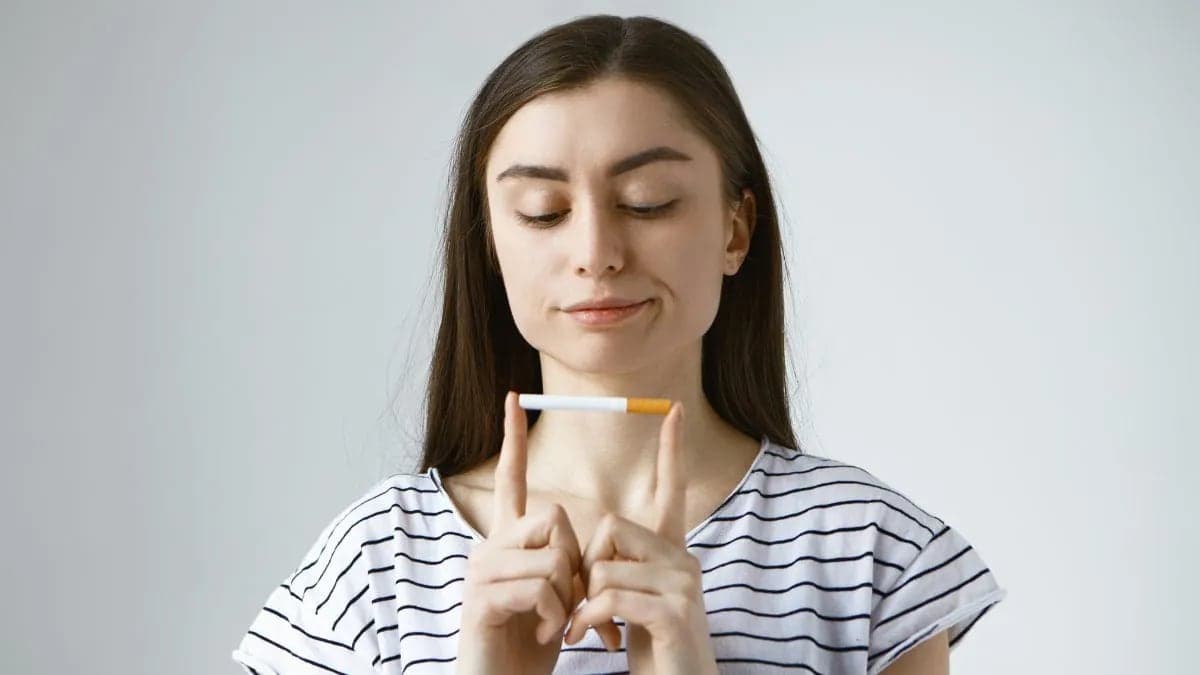
No Smoking Day 2026: Why smoking can disrupt periods, fertility and hormonal balance
On No Smoking Day 2026, expert highlight a lesser-known health risk: smoking’s impact on women’s hormones and menstrual health. From irregular periods to early menopause and fertility issues, experts explain why quitting smoking can help restore hormonal balance.
Every year, No Smoking Day sparks conversations about lung disease, heart health and the long-term risks of tobacco. Those warnings matter, of course. But there is another consequence of smoking that rarely makes it into public discussions, its effect on women’s hormones and menstrual health.
For many women, the connection between cigarettes and hormonal balance simply doesn’t register. Period irregularities, painful cramps or fertility struggles are often blamed on stress, lifestyle or genetics. Yet doctors say smoking quietly interferes with the body’s endocrine system, the network that regulates hormones and reproductive health.
According to Dr M.L. Bhansali, cardiologist and general physician at ILS Hospitals in Howrah, the effects can begin much earlier than most people realise. Smoking does not just harm the lungs; it also disrupts the hormonal signals that guide ovulation, menstruation and fertility.
What does cigarette smoke do inside the body
A cigarette contains far more than nicotine. Tobacco smoke carries thousands of chemicals, including tar, carbon monoxide and heavy metals. Once inhaled, these chemicals travel well beyond the lungs and start to interact with various systems in the body. One of the systems that is most susceptible to this interference is the hormonal axis that connects the brain and the ovaries. This is the system that governs when ovulation occurs and the menstrual cycle.
Nicotine also causes the release of stress hormones such as cortisol. When this is prolonged, it can alter the normal hormonal pattern in the body, which in turn can affect ovulation. Over time, this can lead to alterations in menstrual patterns.
Why smokers may experience more painful periods
Smokers are known to experience increased menstrual cramps. There is a physiological explanation for this. Nicotine causes blood vessels to narrow, reducing blood flow to different parts of the body, including the uterus. Reduced circulation can intensify uterine contractions during menstruation, which may make cramps feel sharper and more persistent.
Because these symptoms develop gradually, many women never link them to smoking. They simply assume their periods have always been painful.
Smoking and the estrogen connection
Estrogen is central to a woman’s reproductive health. It helps regulate menstrual cycles, supports bone strength and plays a protective role in heart health. Smoking interferes with this hormone in several ways. Research suggests tobacco exposure can lower estrogen levels in the body, effectively acting as an anti-estrogen.
Lower estrogen levels are associated with earlier menopause and a higher risk of osteoporosis later in life. For women planning a family, the consequences may appear sooner. Smoking has also been linked to a reduction in ovarian reserve, the number of healthy eggs available for fertilisation.
The encouraging part: the body can recover
The good news is that the body begins to repair itself surprisingly quickly after someone stops smoking. Within weeks, circulation improves, and stress hormone levels start stabilising. Over time, many women notice their menstrual cycles becoming more predictable and less painful.
Awareness days often focus on dramatic health risks that appear years later. Yet some effects of smoking are far more immediate, quietly influencing the body’s internal balance month after month. Hormones operate behind the scenes, keeping the body in rhythm. Protecting that rhythm may be one of the most overlooked reasons to quit smoking, and for many people, a powerful motivation to start today.
Also read: PCOS symptoms explained: When acne and hair growth need medical attention
Disclaimer: Tips and suggestions mentioned in the article are for general information purposes only and should not be construed as professional medical advice. Always consult your doctor or a dietician before starting any fitness programme or making any changes to your diet